


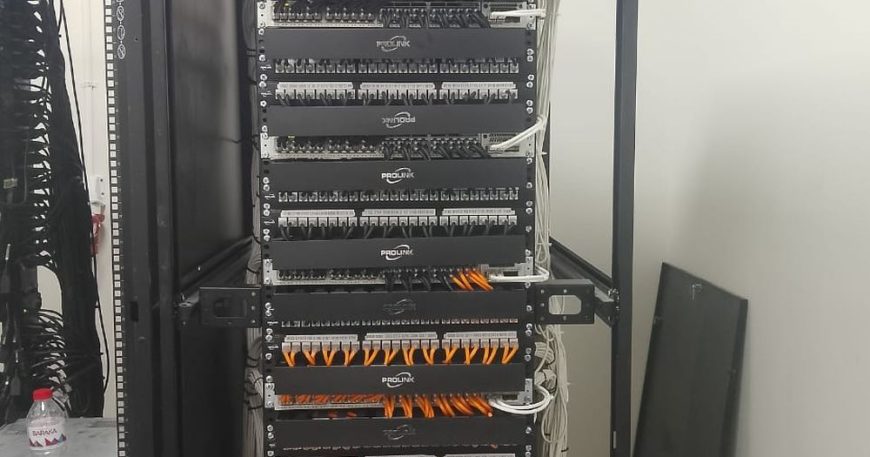
Nobody has ever been excited about a patch panel. Structured cabling is the least visible part of an IT estate and the part most likely to be done in a hurry, because it usually sits on the critical path of a building project where everyone else is already late.
It is also the layer that decides whether your next intermittent fault takes 10 minutes or 10 hours to find.
What an as-found survey is
Before touching anything in an existing building, we photograph and document what is actually there. Not what the original drawings say — what exists. Every rack, front and rear. Every patch panel with its current labelling, however wrong. Every cable route we can trace. Every switch, its port allocation and what is connected.
This takes a day or two and it is the most valuable document produced by the whole project, for one reason: it is the only record of what you inherited. When something behaves oddly six months later, the as-found tells you whether it was like that before you started.
What usually turns up
- Cables terminated to a standard that was never checked, failing at gigabit but passing at 100 Mb
- Two patch panels labelled with the same room numbers from different renovations
- Live cables with no known destination, which nobody dares unplug
- Cable runs exceeding maximum length, working until temperature changes
- Power and data sharing a tray for a long parallel run, producing interference nobody has connected to the “slow network” complaints
The as-built is the deliverable, not the cabling
When the work is done, the handover pack should let an engineer who has never visited the building diagnose a fault from the documentation. That means:
- Rack elevations showing every device with its U position, front and rear.
- Port-to-port schedules — which outlet connects to which panel port to which switch port, with the room and desk it serves.
- Labelling that matches the paperwork. Both ends of every cable, in a scheme that survives someone moving desks.
- Test results per link — certification to the relevant category, not a visual inspection.
- Photographs of every rack as left, which settles arguments about who changed what.
Why this is a cost saving and not a cost
The argument against documentation is that it adds days to a project. Set against that: every future fault diagnosed from a schedule rather than by tracing cables, every office move planned rather than discovered, every audit answered from a folder. On the environments we operate, the difference in mean time to repair between a documented and an undocumented site is not marginal — it is the difference between a phone call and a site visit.
The engineer who designed the environment should be the one who documents it, while it is fresh. Documentation written six months later by someone else is a work of fiction.
If your site is undocumented today
You do not need to rewire anything. Commission an as-found survey on its own, as a standalone piece of work. It produces the reference you are missing, tells you which links are actually out of specification, and gives you a prioritised list rather than a vague sense that the cabling is a mess.
Survey, remediation and as-built documentation, delivered as a reference your own team can use. Infrastructure Solutions →

