HPE ProLiant Servers in Egypt: Data Centre & Cluster Builds
HPE Partner · Egypt
ProLiant, racked and cabled by the people who will run it.
HPE ProLiant compute and storage inside real data centre builds, often alongside Dell PowerEdge and EMC storage in mixed-node environments. Architected, racked, cabled, configured, and then operated by one team.
Work we have delivered
Photographs and illustrations of the ProLiant compute and storage tiers we build. The programmes listed below are real Stark deliveries.
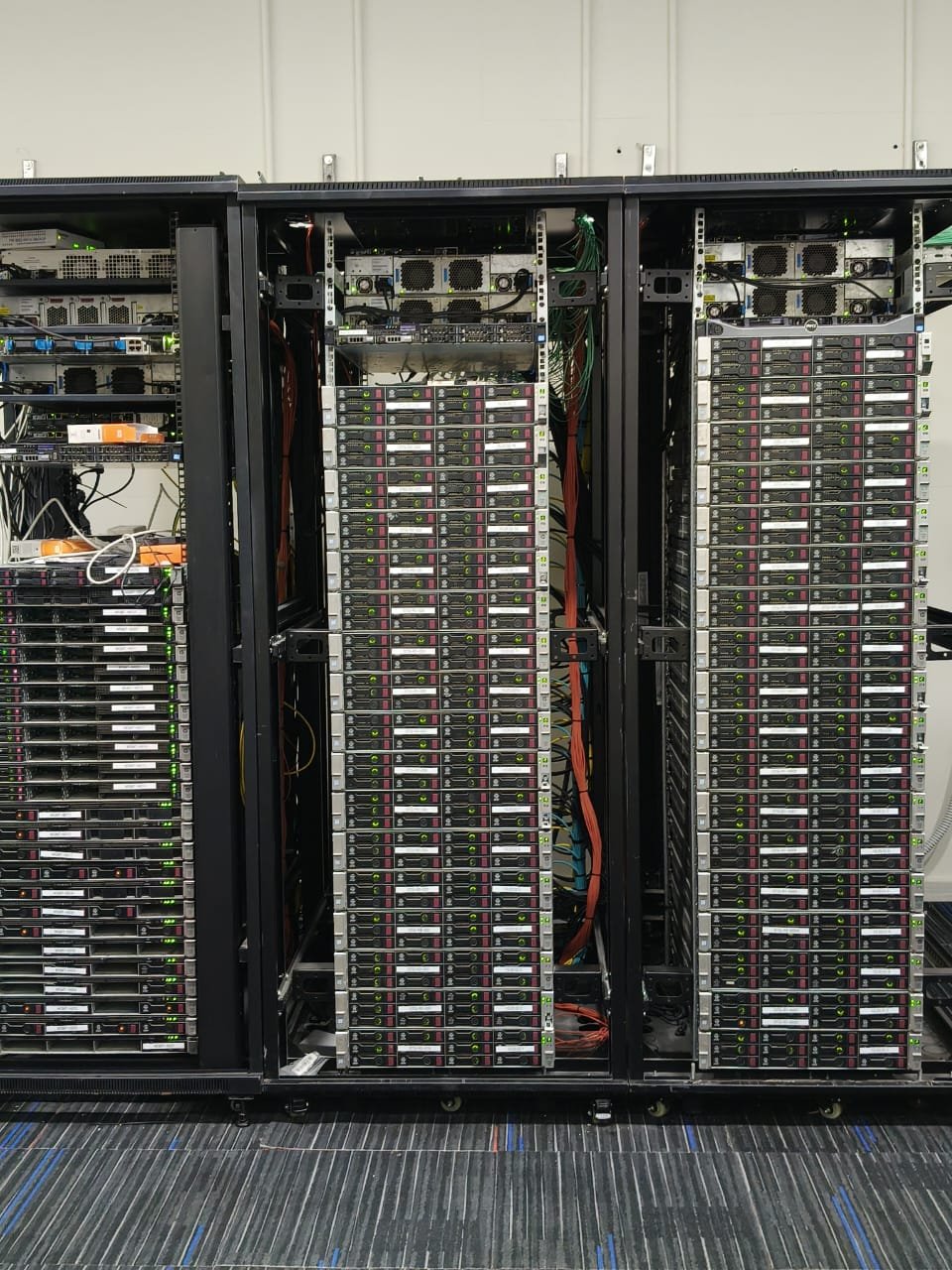
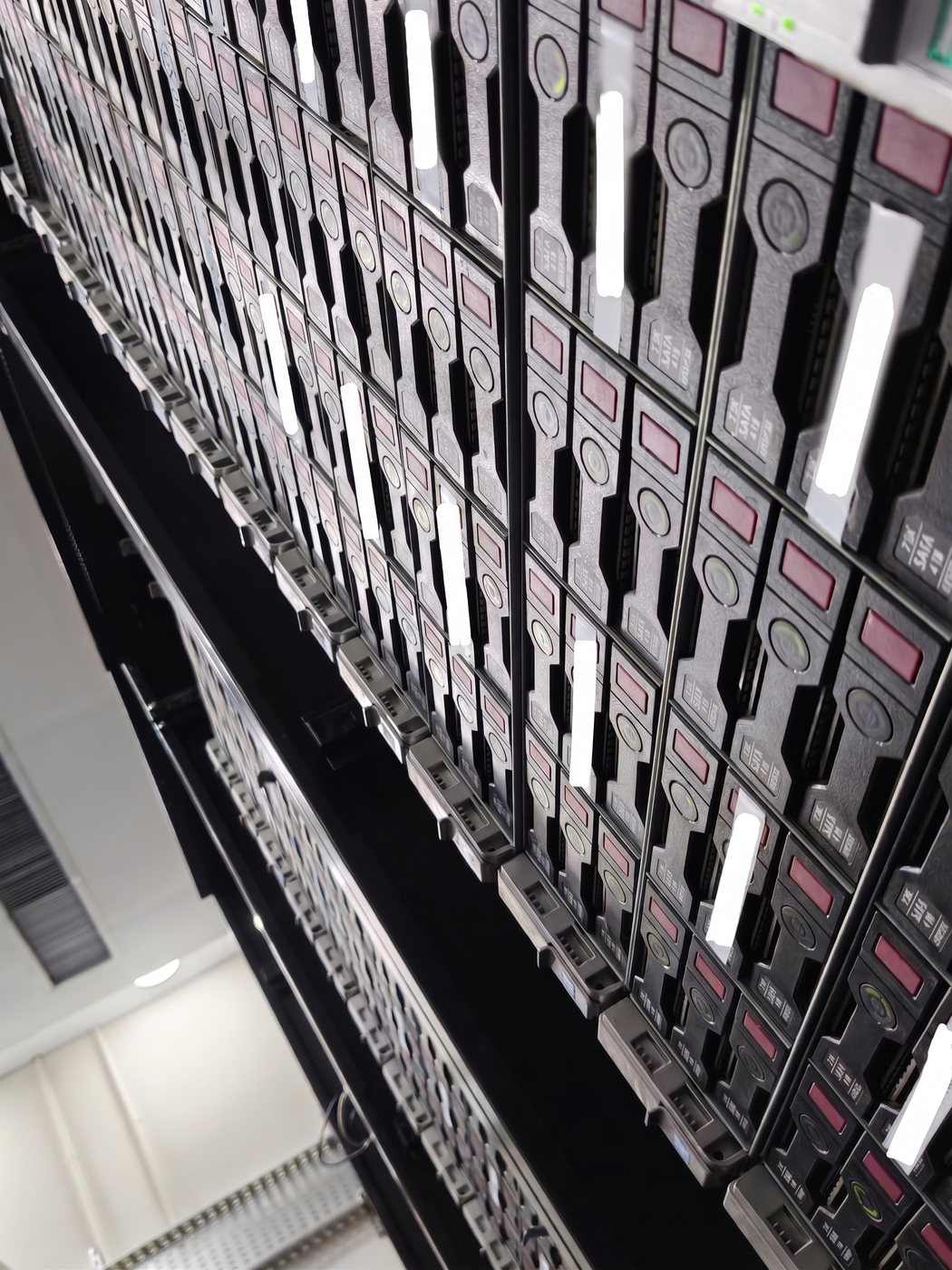
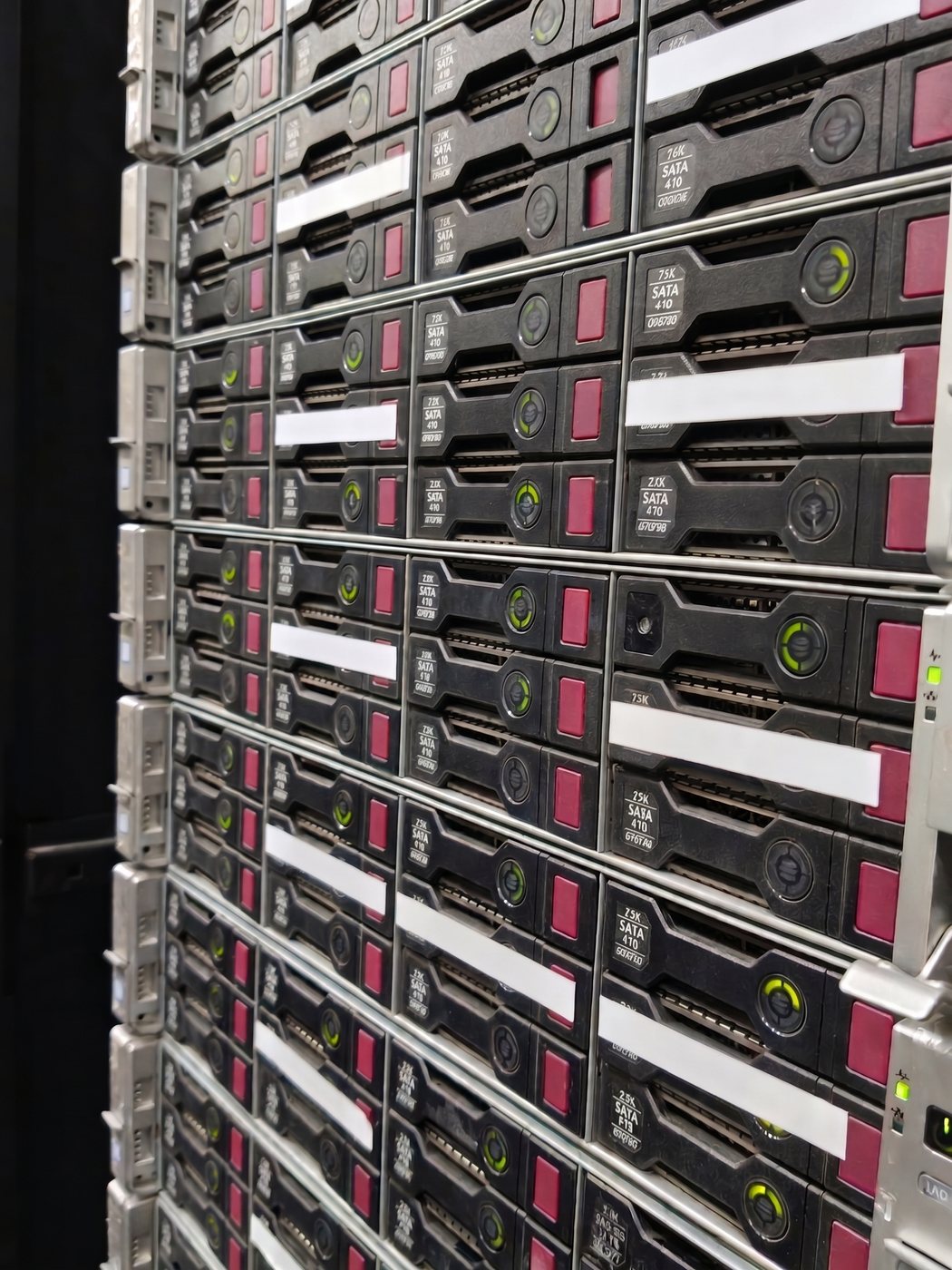
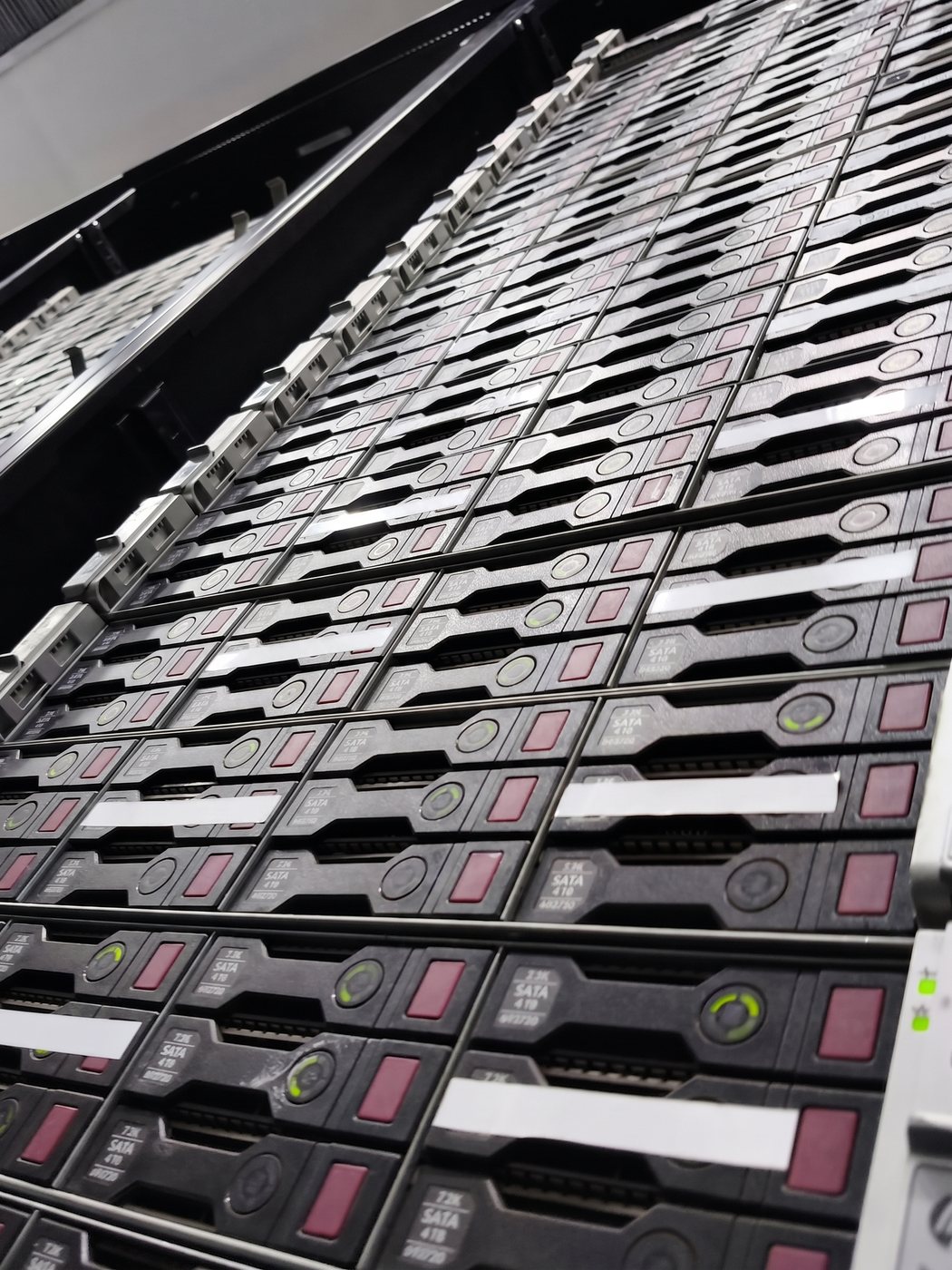
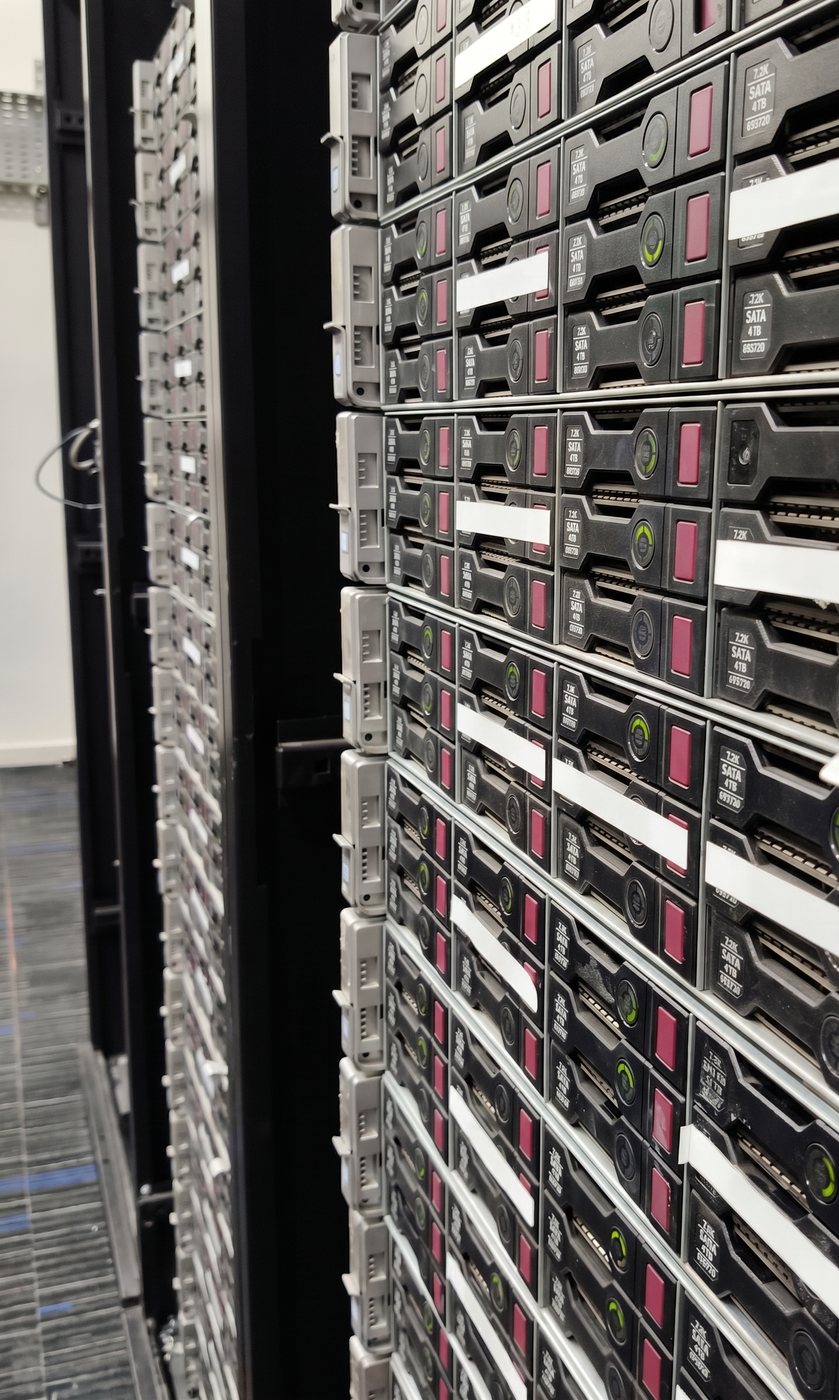
Three racks of HPE ProLiant compute, populated and running. Front elevation on a floor Stark built.Rack elevation of a ProLiant compute tier, the density and layout we build to.Node and drive density at the rack face, as configured for high-throughput workloads.Cluster-scale ProLiant deployment, the shape of a full compute tier.Cold-aisle view along a populated ProLiant row.
Stark’s HPE work is delivered under client confidentiality. Sites, identifiers and locations are withheld.
Where we have deployed it
HPE ProLiant is one of our two default platforms for compute and storage nodes. Many of the environments we build are deliberately mixed. ProLiant alongside PowerEdge and EMC, because the right node for a workload is not always the same brand across a whole rack.
Programme
What was delivered
Geoscience HPC Cluster Oil & gas · Tier-III DC · Egypt
Solution architecture, then racking and stacking every node. Structured cabling and cluster interconnect, high-performance storage, routing and firewalls. From bare racks to a production processing cluster.
HPC & GPU Clusters Research & energy · Saudi Arabia
High-density interconnect cabling, rack power and cooling coordination, cluster networking and high-throughput storage, delivered on site in the Kingdom by Stark engineering teams.
National Data Centre Government & defence · Egypt
Compute, storage and virtualisation inside a full physical build and supervised deployment.
What we cover on ProLiant
Sizing and specification
Generation, processor, memory and drive layout chosen against the actual workload, and a straight answer when the specification is larger than the job needs.
Build and commissioning
Racking, dual power feeds, structured and interconnect cabling, firmware baselining, iLO out-of-band management configured from day one rather than after the first incident.
Ongoing operation
Monitoring, firmware and patch cycles, hardware fault handling and warranty escalation, by the same engineers who built it.
What we actually configure on ProLiant, and what we find on the ones we inherit
ProLiant is a well-built platform that is very often left half-configured. The hardware arrives, it boots, it runs, and the settings that decide whether you can fix it remotely at two in the morning, or whether you learn about a failing drive before it takes the array. Are never touched. This is the work, and it is also the audit we run on every estate we take over.
iLO, the part most estates get wrong
On its own management networkOut-of-band management addressed on a dedicated management VLAN, unreachable from the general user network and never, under any circumstances, from the internet. Anyone who reaches iLO owns the server outright: power, console, boot media, firmware. It is the most powerful interface in the rack and it is routinely the least protected.
Named accounts, default credentials goneThe factory password removed, named administrator accounts created, and directory integration where the estate supports it. A single shared iLO password written on a label inside the rack door is a finding we still make regularly.
The licence tier that actually helps at 2amRemote graphical console and virtual media are the difference between fixing a failed boot from home in fifteen minutes and driving to a data centre at night. Where uptime justifies it we specify that entitlement deliberately instead of accepting whatever shipped.
iLO firmware kept currentManagement controllers have had serious vulnerabilities, and they are exactly the component nobody remembers to patch because the server itself is running fine. iLO firmware is part of our baseline, not an afterthought.
Alerts and logs leaving the boxHardware events and the integrated log forwarded into the monitoring we run. An amber health light nobody is looking at is not an alert.
Firmware as one validated set, not a pile of updates
A tested bundle, applied togetherSystem ROM, iLO, storage controller, drives and network adapters brought to one combination that the vendor has validated as a set. HPE publishes exactly that as a service pack, and using it is the difference between a predictable estate and a collection of one-off configurations.
One baseline per generationEvery node of a given generation on the same firmware level, recorded. Mixed levels across a cluster produce intermittent faults that cannot be reproduced on the node you happen to be testing.
An upgrade rhythm, with a rollback positionScheduled windows, one node first, and the previous known-good level documented. Firmware updated reactively during an incident is how a fault becomes an outage.
Drive firmware includedFrequently skipped, and a real source of phantom failures. Drives dropping out of arrays with no physical fault at all.
Storage controller, cache and drives
The cache battery is a monitored itemWrite caching depends on a healthy energy pack. When it fails, the controller silently disables write cache to protect your data. Performance falls by a large factor and nothing obvious announces it. We have been called in for “the server has got slow” more than once and found exactly this. It is a monitored alert on every estate we run.
RAID level against rebuild timeChosen for the drive size and for what losing the array would actually cost, with the usable capacity stated before purchase rather than discovered at handover.
Boot separated from dataThe operating system on its own device rather than carved out of the production array, so a rebuild does not put the boot volume at risk and the OS is not competing with production I/O.
Endurance matched to the workloadRead-intensive drives under a write-heavy workload wear out on a similar schedule and fail as a group. The drive class is a specification decision, not a line item to trim.
Predictive failure alerts actually routedThe platform will tell you a drive is going before it goes. That only helps if the message reaches someone who will act on it.
Memory, thermal and power
DIMMs populated to the platform’s rulesMemory installed in the arrangement the platform actually wants, across all channels. An unbalanced layout gives away a significant share of memory bandwidth for no cost saving whatsoever, the same capacity, correctly arranged, is the same money.
Thermal profile set deliberatelyFan and cooling profiles matched to the configuration. A third-party card the platform does not recognise can push fans toward maximum permanently: noisy, power-hungry, and a signal that something was never configured properly.
Power capping and rack budgetPer-node draw known and totalled per rack against what the facility can actually deliver, with headroom for the moment everything restarts together after an outage.
Dual supplies on genuinely separate feedsTwo cords into two independent paths, verified by pulling one at commissioning. Both into the same strip is the most common false redundancy in any server room.
Blanking panels and airflow disciplineEvery empty U blanked and front-to-back airflow preserved. Recirculated hot air throttles the nodes you paid a premium for.
What we find on inherited ProLiant estates
What we find
Why it matters
What we do
iLO on the user VLAN, factory password
Full control of the server available to anyone on the office network.
Move it to the management VLAN, named accounts, credentials rotated and recorded properly.
Firmware untouched since delivery
Known defects and security advisories accumulating, and a cluster nobody can safely patch under pressure.
Bring to a validated baseline, one node first, in a scheduled window.
Failed cache energy pack
Write caching silently off. The business has been living with a fraction of the performance it bought.
Replace the module, restore caching, and add the alert that should have caught it.
Amber health LED for months
A failed component the server has been reporting to an empty room.
Connect hardware alerting to our monitoring, then clear the backlog of real faults.
Support expired on production nodes
A failed part becomes a procurement exercise during an outage.
Register every node with its expiry date and renew ahead of it.
Both power cords in one strip
Dual supplies bought, redundancy never achieved.
Re-feed to independent paths, then prove it by pulling one.
No as-built documentation
Every future change begins with a day of tracing cables and guessing.
Produce the elevation, cabling schedule and configuration record, and keep them current.
We will run this audit on your existing ProLiant estate as part of the free assessment. Including the estates we did not build. Most of what it finds costs nothing to fix.
Most integrators hand you a design. Some hand you hardware. We are on site with cable in hand, and still there at 3am on cutover night, and every night after it.
That is the difference between a purchase order and a working cluster.
Tell us the workload, not the model number
Describe what has to run and how fast. We will size the platform, quote it, and tell you if you are over-specifying.