Dell Technologies Partner in Egypt: PowerEdge, HPC & Storage Clusters
Dell Technologies Partner · Egypt
PowerEdge, racked and cabled by the people who will run it.
Compute and storage clusters for HPC, GPU and data centre workloads, architected, racked, cabled, configured and then operated by one team.
Work we have delivered
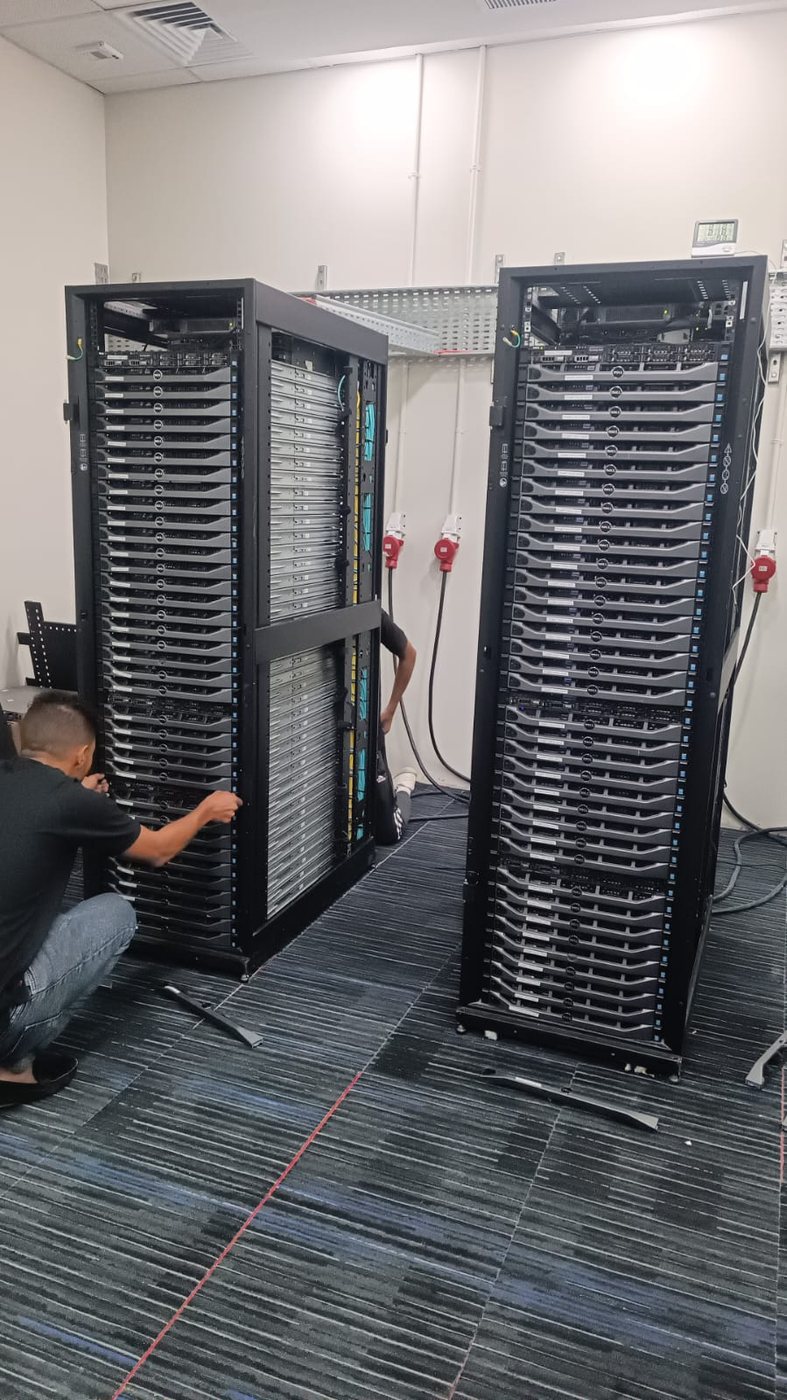
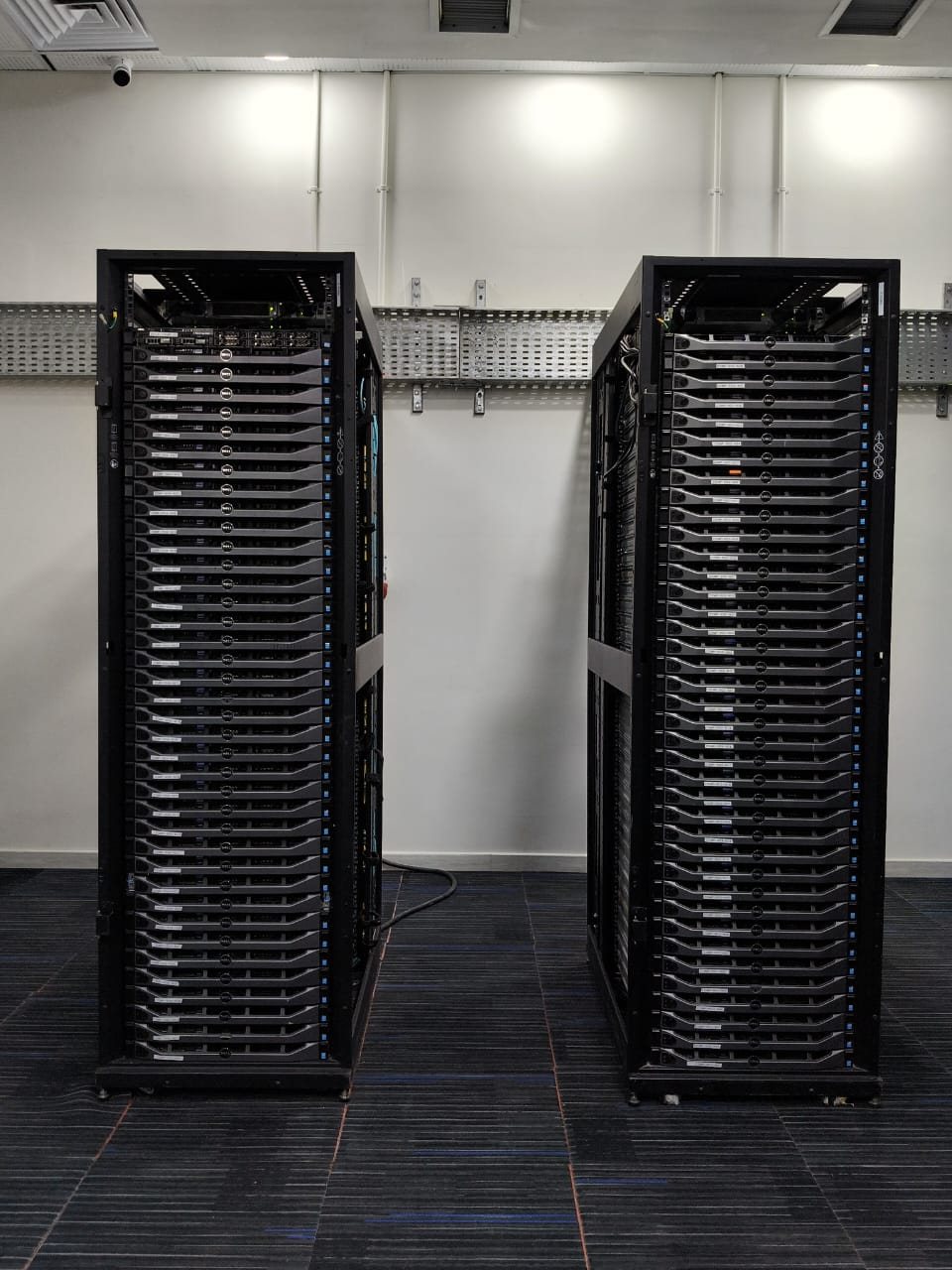
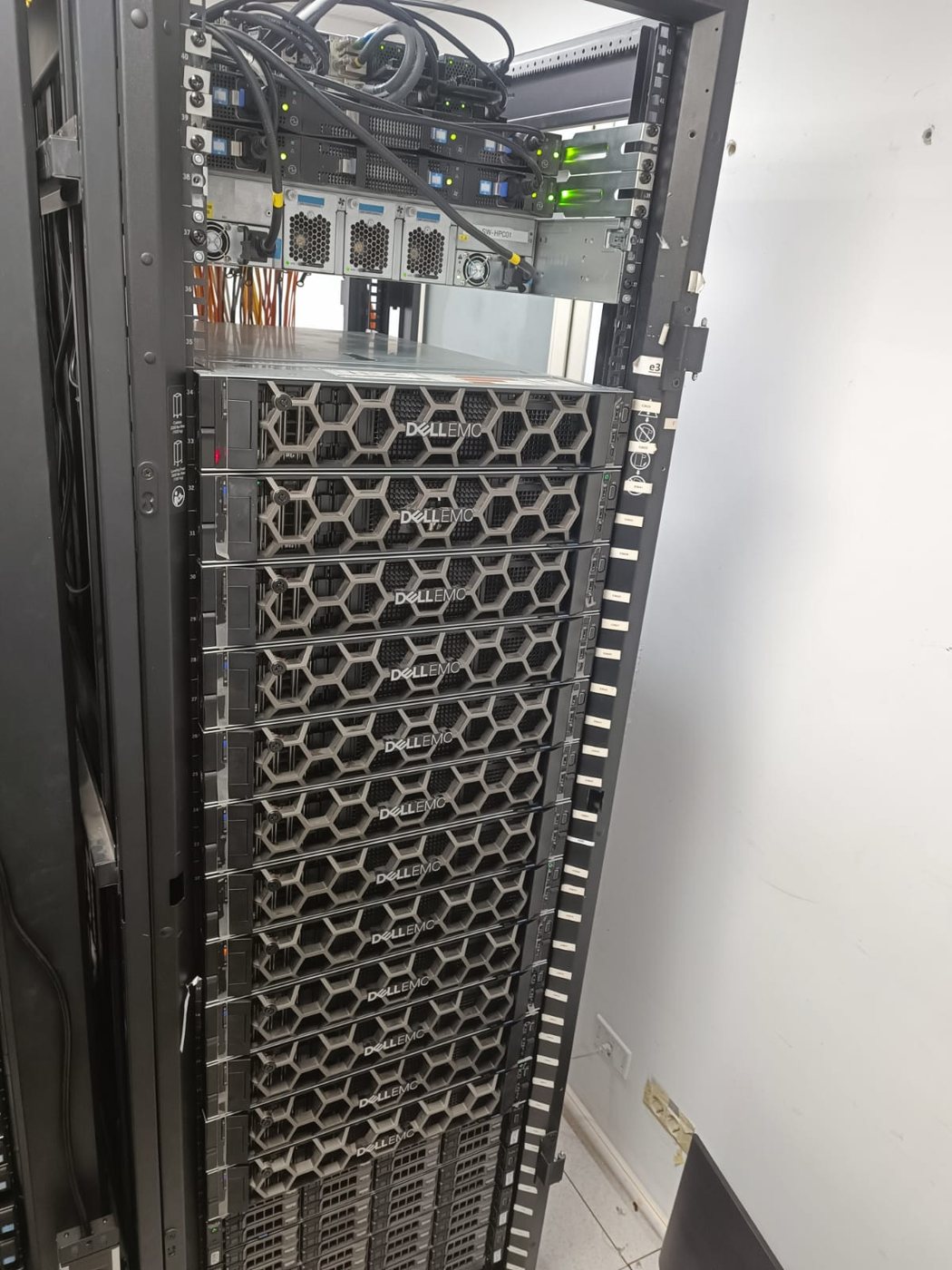
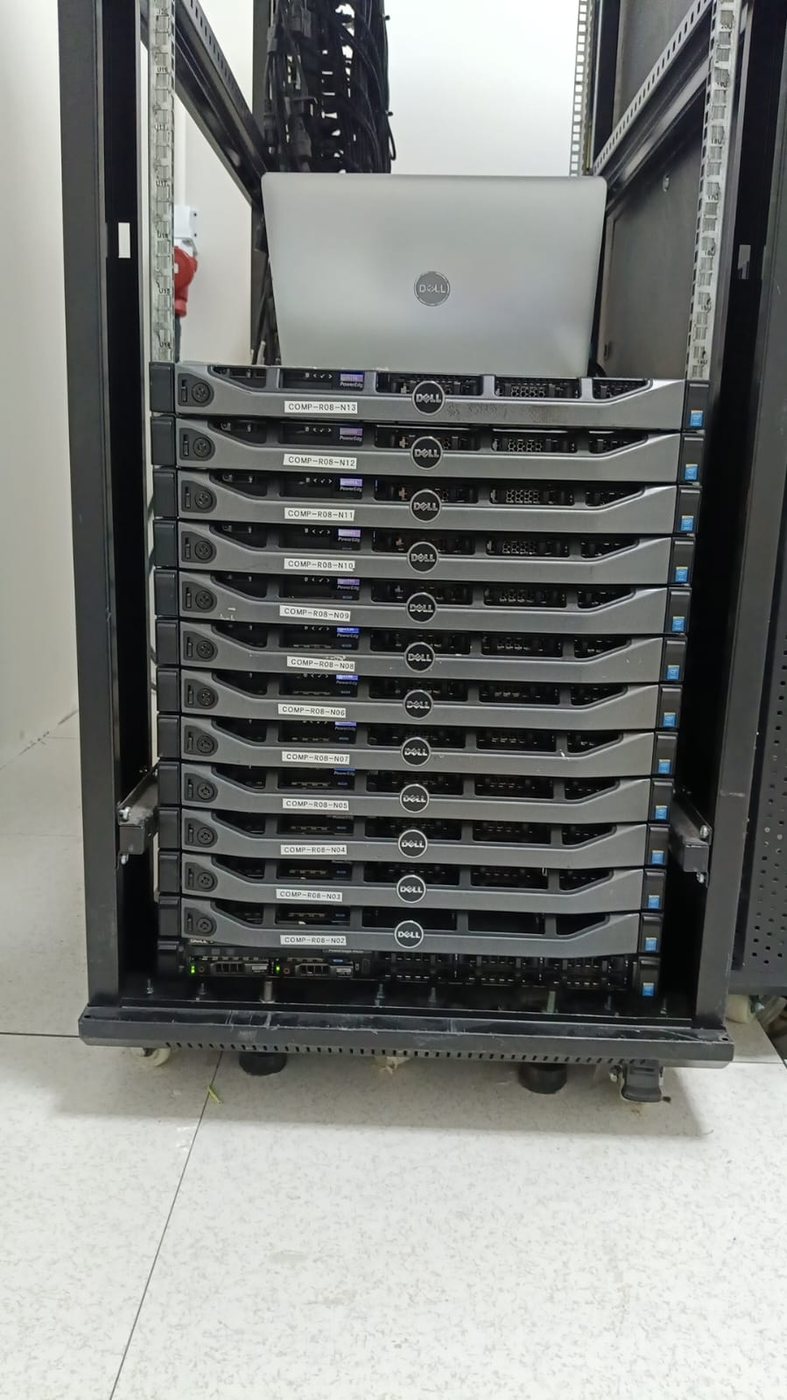
Photographs from data centres Stark designed, built and now manages. Not stock images.
Mid-build. Stark engineers seating PowerEdge nodes and dressing cable on the floor of a live data centre project.The same two racks at handover: every node seated, bezels on, cable management dressed and labelled.Dell EMC PowerEdge 2U nodes beneath a redundant top-of-rack switch pair, in an HPC cluster we racked, cabled and configured.Compute nodes stacked and labelled during commissioning, with the build console on top.
Where we have deployed it
Dell PowerEdge is our default for compute node and storage clusters.
Programme
What was delivered
Geoscience HPC Cluster Oil & gas · Tier-III DC · Egypt
Architected the solution, then racked and stacked every node. Structured cabling and cluster interconnect, high-performance storage, routing and firewalls. From bare racks to a production processing cluster.
HPC & GPU Clusters Research & energy · Saudi Arabia
High-density interconnect cabling, rack power and cooling coordination, cluster networking and high-throughput storage, delivered on site in the Kingdom by Stark engineering teams.
National Data Centre Government & defence · Egypt
Compute, storage and virtualisation inside a full physical build and supervised deployment.
These are real Stark programmes. Client identifiers are withheld under confidentiality.
What actually decides whether the cluster performs
Two servers with the same model number and the same price can differ by a wide margin in real throughput. The difference is never the badge on the bezel: it is how the memory was populated, whether the boot device sits on the data array, whether the controller cache is actually enabled, and whether anyone agreed the power density with the facility before the nodes arrived. These are the decisions we make, and the ones we check on every estate we inherit.
Specifying the node, where performance is won or lost
Cores against clock, with the licence cost includedMore cores is not automatically better. Where the software above it is licensed per core: hypervisor, database, certain analytics platforms, a higher core count can cost more in licensing than the entire server did in hardware. We size the processor against the workload and the licence model, and we will tell you when a lower-core, higher-clock part is the cheaper answer overall.
Memory populated across every channelThe most common and most expensive specification error we find. Memory installed in a layout that leaves channels empty or unbalanced surrenders a large share of the platform’s memory bandwidth, for no saving at all, because the same capacity in the correct arrangement costs the same money. On memory-bound workloads this is the whole performance difference.
NUMA taken into accountA virtual machine or process sized to fit within one processor’s memory locality performs materially better than one that straddles two. Sizing that ignores this produces machines that are slower with more resources allocated to them, which is a difficult conversation to have after the fact.
Boot separated from dataA dedicated boot device rather than carving the operating system out of the data array. It keeps the OS off the array you may need to rebuild, and it stops a boot volume from competing with production I/O.
Drive tier matched to the access patternNVMe where latency is the constraint, SAS or SATA where capacity is. And endurance chosen deliberately. Read-intensive drives placed under a write-heavy workload will wear out early and fail as a group, which is the worst possible failure mode.
Network adapters chosen, not defaultedPort speed and count sized against the actual traffic, with the offload features the workload can use. The adapter that shipped with the configurator is not a decision.
Storage inside the node
RAID level chosen against rebuild timeWith large drives, a single-parity rebuild runs for days and stresses every remaining disk while it does. We specify the level against the drive size and the consequence of losing the array, and we say what the usable capacity will be before you sign.
Controller cache and its power protectionWrite caching is a substantial part of a controller’s performance, and it is only safe with a working cache protection module. When that module fails, the controller quietly disables write caching and performance halves, with no alarm anyone notices. We monitor for it explicitly.
Hot spares, and drives from more than one batchA spare in the chassis so a rebuild starts immediately, and drives sourced across batches so they do not reach end of life in the same week.
Controller and drive firmware as a setMatched, tested firmware across controller, backplane and drives. Mismatched drive firmware is a genuine source of intermittent faults that look like failing hardware and are not.
HPC and GPU, where the ordinary rules stop applying
Power density agreed with the facility firstA rack of GPU nodes can draw several times what a conventional compute rack draws. That number has to be agreed with whoever owns the power and cooling before the order, not discovered when the first rack trips a breaker. We do this calculation as part of the design.
Airflow, containment and blankingFront-to-back airflow respected, every empty U blanked, and hot and cold aisles kept separate. Unblanked racks recirculate hot air into the intakes and throttle the very nodes you paid the premium for.
Interconnect and cable mediaFabric chosen for the workload, with direct-attach copper on short runs and optical where distance requires it. Lengths measured against the actual rack layout, and bend radius respected. A crushed high-speed cable produces errors that are extremely hard to trace later.
Floor loading and rack weightA fully populated rack is heavy enough that the floor, the route in and the lift all have to be checked. This is a survey item, and skipping it stops a delivery at the door.
Topology-aware job placementA scheduler that understands which nodes are close to each other on the fabric. Jobs scattered across the wrong topology spend their time waiting on the interconnect rather than computing.
Management and firmware
Out-of-band management on its own networkThe management controller addressed on a dedicated management VLAN, never reachable from the general user network and never from the internet. Whoever reaches that interface controls the server completely: power, console, boot media, everything.
Default credentials replaced, access namedPer-server default passwords removed, named accounts used, and directory integration where the estate supports it. Shared management passwords circulating informally is the finding we make most often.
The licence tier that actually helps at 2amRemote virtual console and virtual media are what turn a failed boot into a fifteen-minute fix from home instead of a drive to site. Where the workload justifies it, we specify that tier deliberately rather than accepting the base entitlement.
A firmware baseline, applied as a setSystem, controller, adapter and drive firmware brought to one validated combination at build time and moved forward on a schedule. Piecemeal updates are how you end up with a cluster where two nodes behave differently and nobody knows why.
Alerts that reach a personHardware events routed into the monitoring we already run. A predictive drive failure or a failed power supply becomes a ticket the same day, not a discovery during the next outage.
The physical build, the part we are actually known for
Rails and rack depth checked before delivery dayRail kit against the actual cabinet, depth and door clearance measured. Discovering the mismatch with pallets on the loading bay costs a day nobody budgeted.
Dual power supplies on separate feedsTwo cords into two independent paths. Both into the same strip is not redundancy, and we check it on every node at commissioning.
Cable management that does not choke the airflowDressed properly, with bend radius respected and the rear of the rack still able to exhaust. Over-packed cable arms are a thermal problem disguised as tidiness.
Labelled at both ends, and documentedEvery power and data cable traceable, with an as-built handed over. This is what makes the next change a task rather than an investigation.
Commissioning. What we prove before it carries anything
Test
What it proves
Burn-in under sustained load
Infant-mortality failures happen now, in a maintenance window, rather than three weeks into production.
Pull a power cord on each node
The dual feeds are genuinely independent and correctly plugged, not just present.
Pull a network cable on each path
Redundant uplinks fail over as designed, and the bond is configured on both ends to match.
Fail a drive deliberately
The array rebuilds, the spare engages, and somebody actually receives the alert.
Thermal check under full load
Intake temperatures and fan behaviour are within range with the doors shut, which is how the room will actually run.
Firmware and configuration snapshot
The as-built state is recorded, so a replacement node can be brought to the identical configuration.
What you are actually buying
Most integrators hand you a design. Some hand you hardware. We are on site with cable in hand, and still there at 3am on cutover night, and every night after it.
That is the difference between a purchase order and a working cluster.
Tell us the workload, not the model number
Describe what has to run and how fast. We will size the cluster, quote it, and tell you if you are over-specifying.